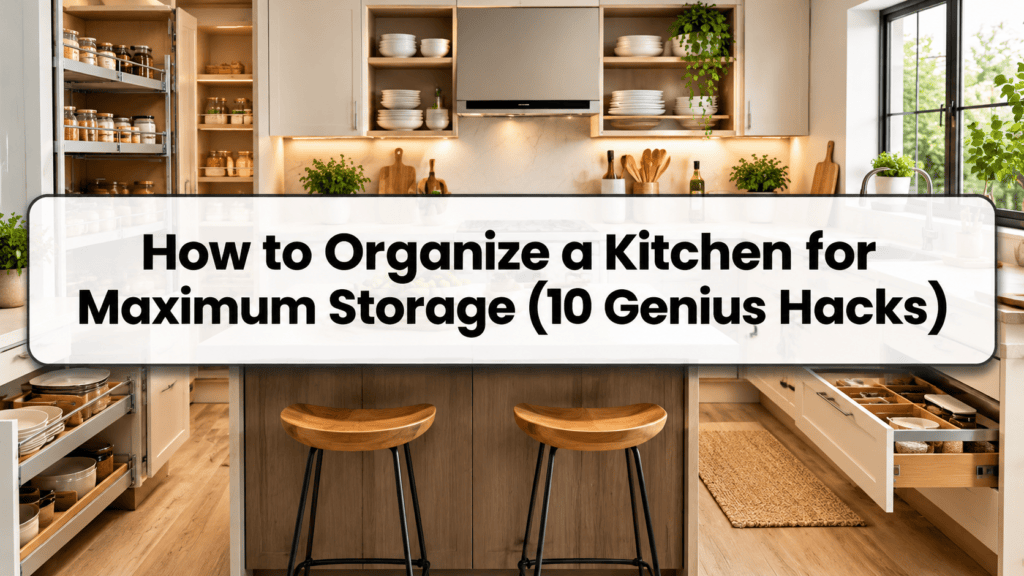
No matter the size of your home, running out of space for pots, pans, dry groceries, and countertop appliances is a universal home management struggle. A chaotic cooking space doesn’t just look visually overwhelming; it directly slows down meal preparation, leads to duplicate grocery spending, and turns everyday cleanup into an annoying chore. Learning how to organize a kitchen for maximum storage allows you to unlock hidden potential across your entire room, keeping essential cooking tools right at your fingertips while maintaining a clean, serene environment.
Creating a high-capacity, streamlined home hub doesn’t require an expensive custom remodel or knocking down walls. By changing how you approach vertical height, deep cabinet cavities, and underutilized corners, you can systematically double your functional storage footprint. Effective spatial management is all about establishing realistic, repeatable systems that align with your family’s daily cooking habits, making it effortlessly simple to keep items organized over the long run.
Whether you’re managing a compact urban apartment galley or looking to streamline a sprawling suburban home, strategic layout techniques and smart hardware upgrades will completely alter your workflow. In this comprehensive, step-by-step guide, we will break down actionable strategies to declutter, reorganize, and fully optimize every square inch of your room for ultimate efficiency and storage capacity.
1. Purge and Group with Intent
Before investing in acrylic containers or drawer inserts, you must audit your inventory. Organizing items you don’t actually use or need simply wastes precious real estate. Empty every single cabinet and drawer, spreading the contents across a clean table so you can inspect everything simultaneously.
Be completely realistic during this phase:
Donate duplicate cookware, extra travel mugs, and appliances you haven’t touched in over six months.
Discard expired spices, stale pantry goods, and chipped glassware.
Group remaining items into functional categories based on daily usage (e.g., baking supplies, everyday coffee accessories, cookware, dinnerware).
Sorting items into clear functional groups establishes the blueprint for your new zones, ensuring everything returns to a logical home after use.
2. Elevate Your Cabinet Organization Game
Unstructured cabinets quickly turn into messy stacks where items in the back are completely forgotten. Standard cabinet shelves leave massive gaps of empty air above plates and bowls. Reclaiming this wasted space requires transitioning from flat, horizontal stacking to smart vertical storage solutions.
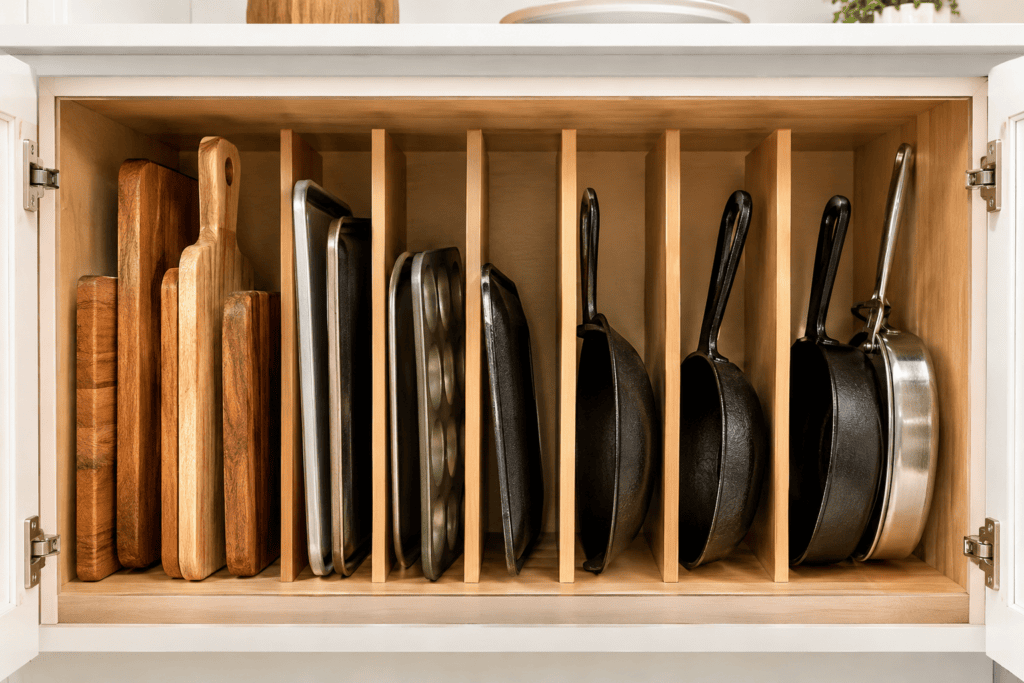
Swap horizontal stacks of baking sheets, cutting boards, and serving platters for vertical tray dividers or tension rods. Storing items upright prevents heavy lifting when retrieving a single pan and preserves vertical shelf space.
For upper cabinets, incorporate heavy-duty adjustable wire risers to create instant multi-tiered storage for dinner plates, coffee mugs, and soup bowls. If you are dealing with awkward dimensions or tight square footage, combining smart spatial layout principles with efficient cabinet organization is vital. Be sure to explore our complete guide on how to design a kitchen to balance structural layout choices alongside your internal storage systems.
3. Build a High-Capacity Pantry System
An unorganized food pantry leads to hidden canned goods, forgotten expiration dates, and wasted food budgets. Master-level pantry organization centers on absolute visibility—if an item isn’t clearly visible, it rarely gets used.

Start by decanting dry staples like rice, flour, pasta, and cereals into clear, stackable glass or BPA-free plastic canisters. Removing bulky, mismatched paper packaging instantly frees up shelf space while protecting your dry food from air exposure and pests.
Implement these actionable kitchen storage ideas across your pantry shelves:
3-Tiered Step Risers: Elevate canned goods and spice jars so back rows are visible at a quick glance.
Corner Turntables (Lazy Susans): Place rotating turntables in tight corners to make oils, vinegars, and condiments accessible with a light spin.
Categorized Mesh Baskets: Group loose snacks, breakfast bars, and baking mixes into dedicated, labeled wire or woven baskets.
4. Reclaim Unused Vertical Wall Space
When your cabinetry and drawers hit maximum capacity, look to your open walls for supplementary storage. Leaving walls bare in a high-demand room misses an opportunity to clear off flat counter space.
Mount a heavy-duty magnetic knife strip onto your tile backsplash to eliminate bulky wooden knife blocks. Wall-mounted pegboards, stainless steel hanging rails, or copper hooks work exceptionally well for hanging measuring cups, strainers, wooden spoons, and daily fry pans.
For extra floor space near an open wall, consider adding a mobile multi-tier utility cart. This provides flexible storage for fresh produce, cookbooks, or specialized coffee bar setups without cluttering main work surfaces.
5. Tailor Drawers with Modular Dividers
Deep, wide drawers without internal structure quickly descend into chaotic junk drawers. Installing adjustable dividers ensures every utensil maintains a fixed, easily accessible spot.
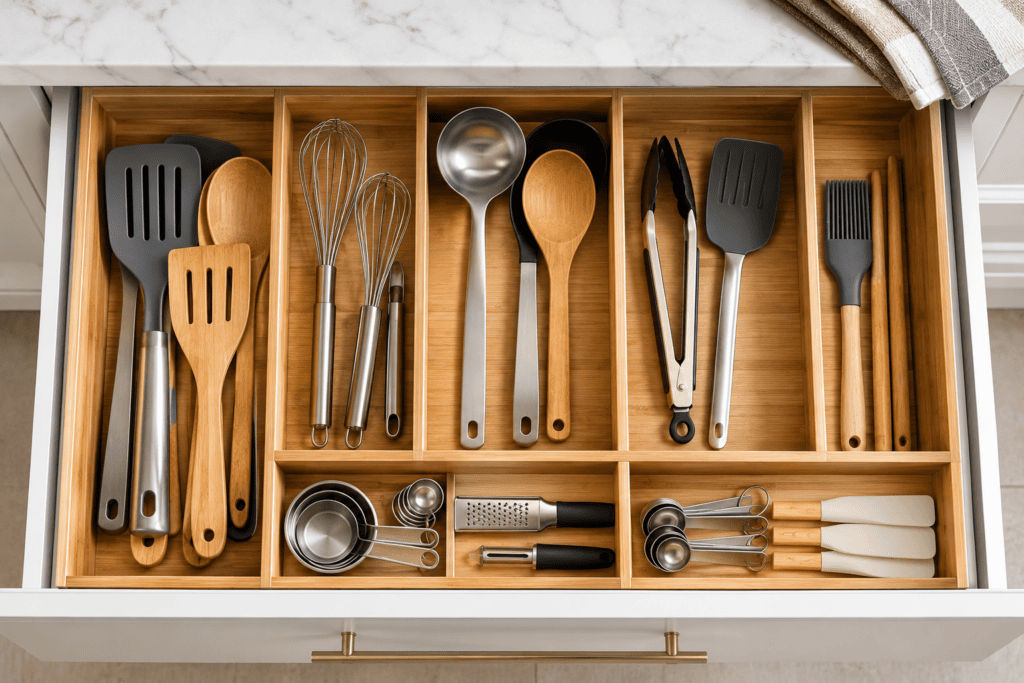
Ditch cheap plastic trays that slide around. Opt for expandable wooden or silicone insert dividers that lock securely into place. Use shallow top drawers for flatware and small utensils, while reserving deep lower drawers for heavy stockpots or stacked food storage containers.
For food container drawers, insert adjustable wooden peg systems to keep plastic and glass containers separated from their matching lids, preventing stressful lid-hunting sessions during meal cleanup.
6. Maximize Blind Corners and Cabinet Doors
Deep corner cabinets and cabinet doors are often forgotten, yet they hold significant untapped storage potential when outfitted with proper hardware.
Install swing-out hardware or multi-tiered rotating Lazy Susans inside deep blind corners. These pull-out mechanisms glide out into full view, bringing heavy mixing bowls and appliances directly to you.
Additionally, utilize the inside faces of your cabinet doors:
Mount slim metal racks inside sink doors to store sponges, dish soaps, and scrub brushes.
Install flat wire holders on upper doors to hold cutting boards, foil boxes, or parchment paper boxes.
If you are navigating smaller architectural quarters, these subtle modifications yield remarkable storage returns. Learn more smart visual strategies by browsing our guide on how to make a small kitchen look bigger to open up compact spaces visually while boosting functionality.
7. Align Storage Zones with Work Centers
Maximum storage efficiency relies on ergonomics. Even the most organized items will feel inconvenient if they are placed far away from where they are actually used. Aligning your storage locations with primary activity centers keeps your workflow smooth and fluid.
Organize your items according to three primary operational zones:
Prep Zone: Store chef knives, cutting boards, mixing bowls, peelers, and garbage bins directly around your main prep counter.
Cooking Zone: Place pots, pans, spatulas, cooking oils, and frequently used seasonings right beside the cooktop or range.
Cleaning & Storage Zone: Keep dish soap, sponges, dish towels, Tupperware containers, and plastic wrap close to the sink and dishwasher for easy cleanup.
Evaluating your floor plan layout helps prevent unnecessary steps across the room. To assess your layout or plan an upgrade, review our deep dive on selecting the perfect kitchen layout for your daily routine.
8. Utilize Over-the-Fridge and Toe-Kick Areas
The gap between the top of your refrigerator and the ceiling (or upper cabinets) is ideal for storing oversized, low-frequency items. Place large roasting pans, seasonal holiday platters, or secondary stockpots in matching lidded storage boxes on top of the fridge to keep them dust-free while freeing up main cabinet shelves.
If you are undergoing cabinetry modifications, consider adding base cabinet “toe-kick drawers.” These ultra-shallow drawers sit flat in the dead space beneath your lower cabinets—offering perfect storage for baking sheets, muffin tins, or flat placemats.
Key Storage Hacks Overview
| Storage Location | Smart Upgrade / Strategy | Primary Benefit |
| Pantry Shelves | Decant dry goods into clear stackable canisters | Prevents clutter & tracks food inventory |
| Lower Cabinets | Add vertical tray dividers | Keeps pans and boards organized upright |
| Drawers | Insert modular bamboo dividers | Prevents utensil clutter & saves drawer space |
| Walls & Backsplash | Mount magnetic strips & hanging rails | Reclaims valuable counter surface area |
| Deep Corners | Install swing-out shelves / Lazy Susans | Eliminates lost dead space in corner cabinets |
| Under-Sink Cavity | Add 2-tier sliding wire baskets | Organizes cleaning supplies around plumbing |
Resource Standards & Safety Guidelines
When storing food items and organizing dry pantries, safety and proper shelf life are critical considerations. For official guidelines on maintaining safe pantry temperatures, proper food rotation rules, and shelf-life recommendations, refer to the official USDA Food Safety and Inspection Service Storage Guidelines.
Frequently Asked Questions (FAQs)
What is the most effective way to start organizing a small, cluttered kitchen?
Start with a thorough decluttering session to eliminate non-essential cookware and expired food. Next, prioritize vertical storage solutions like wall-mounted rails, vertical cabinet pan dividers, and shelf risers to keep your limited counter space completely clear.
How do I store heavy pots and pans without scratching them?
The ideal solution is storing heavy pots inside deep pull-out drawers fitted with protective felt pads or pan protectors between stacked items. Alternatively, install vertical pan racks inside base cabinets or mount a ceiling pot rack if cabinet space is limited.
How can I keep my countertops clean and clutter-free?
Enforce a strict “daily use only” rule for counter space. Keep only items you use every single day—such as a coffee maker or main cutting board—on top. Store secondary appliances like blenders, toasters, and food processors inside lower cabinets or pantry shelves.
Are clear containers necessary for good pantry organization?
While not strictly mandatory, uniform clear containers offer unmatched benefits: they seal out air and moisture to extend shelf life, eliminate visual clutter from mismatched retail packaging, and allow you to quickly check food quantities before heading out for groceries.